Three Ways to Deep Clean a Carpet, and the Water Temperature Each One Needs
Three ways to deep clean a carpet at home, with the exact water temperature, dwell time, and drying time each one needs, and the point where a professional is the honest answer.
One dinner-plate-sized disaster in an otherwise fine room needs a white towel, the right water temperature, and ten minutes. That is the entire cost. A slow vacuum in two directions is free as well, and on a carpet that mostly looks dusty it does a good share of what people pay a machine to do. Do both of those before you get in the car.
Next rung up is dry compound. You sprinkle it, brush it down into the pile, wait out the label, and vacuum it back up, and almost no water goes into the floor. The room is usable the same afternoon, and this is the only option on the list if the carpet is wool, if the backing is old, or if the lease says nothing gets soaked.
A whole room of ground-in traffic soil is the job that earns the rental counter. A rented hot-water extractor is the deepest clean available to anyone who does not own equipment, and it wants three numbers you were probably never given: hot tap water in the tank (120°F / 49°C is the commonly recommended heater setting, and it is the right neighborhood), a pre-spray left to work for five to ten minutes without drying out, and six to twelve hours of drying with air moving before shoes or furniture come back. Dragging a forty-pound machine across nine hundred square feet to fix a coffee spill is a lot of effort for a small win, so save it for lanes that have actually gone dark.
Which of these three methods actually fits your carpet today?
Walk the room before you decide. Get down at eye level with the floor, in the doorway or the traffic lane in front of the couch, and look at the pile against the light. Three different problems show up there, and each one points at a different method.
If the traffic lanes are visibly darker than the carpet under the furniture, you have general soil packed down into the base of the pile. That is a job for hot-water extraction, because nothing else pulls suspended dirt back out of the carpet instead of just redistributing it. If the carpet is wool, or a rug with a jute backing, or the pad and subfloor situation underneath is a question mark, use a dry compound and keep the water out of it. If there is one spot and the rest of the room looks fine, hand-treat the spot and go do something else with your Saturday.
Here is the whole comparison in one place, so you can match a method to a morning:
- Hand spot work: cold water under about 75°F (24°C) for protein and dye stains, warm water at 100 to 110°F (38 to 43°C) for greasy ones, solution left on the fiber three to five minutes before blotting, then a damp rinse and a towel weighted on the spot for a few hours. Keep weight and traffic off it until it is dry to the touch all the way down, usually two to six hours. Costs you a towel.
- Dry compound: room-temperature product, worked into the pile and left fifteen to thirty minutes depending on the label, then vacuumed out thoroughly in two directions. Essentially no drying time; the room is back in service as soon as you are done vacuuming. Cleans the pile, not the base.
- Hot-water extraction, rented machine: hot tap water in the tank, pre-spray dwelling five to ten minutes, one wet pass followed by three or four dry passes, six to twelve hours of drying with fans, longer in a humid house with no air moving. Deepest clean. Costs you the day.
One honest note about that order. It runs cheapest to deepest, and the deepest option is also the only one that can put water somewhere you cannot get it back out of, down in the pad and the subfloor where it sits and sours. Extraction takes out the most soil and carries the most risk in the same afternoon. Water goes in easy and comes out hard.
Hot-water extraction with a rented machine: the deep clean
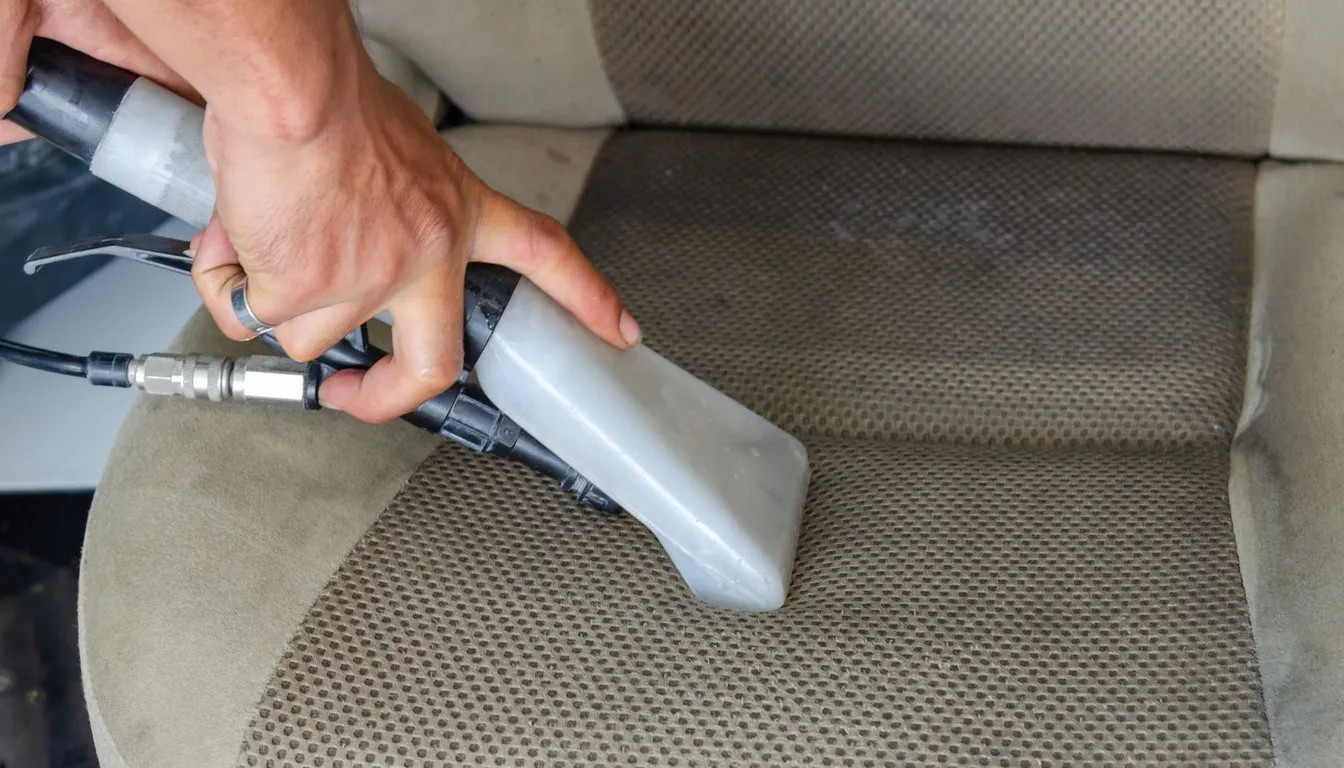
Hot-water extraction is the method most people call steam cleaning, and there is no steam involved anywhere in it. A pump sprays hot water and detergent into the pile under pressure, the solution suspends the soil, and a vacuum slot immediately behind the spray jets pulls the dirty water back into a recovery tank. Professionals run truck-mounted units that heat water far past anything you will produce at home, with heaters rated well above 150°F (66°C), though what reaches the carpet through the wand runs cooler. A rental machine does not do that, and the part no one ever mentions at the counter is that it does not need to.
What temperature the tank actually wants
Fill the solution tank from the hot tap and use it while it is hot. A typical water heater set point is around 120°F (49°C), which is the standard conservative setting for scald safety, and it is plenty of heat for a rental unit. Do not boil a kettle and pour it in. The tanks, seals, and pump housings on consumer machines have a maximum fill temperature printed in the manual, and going past it warps plastic, kills seals, and voids the rental deposit you would like back. Repeated soaking also weakens the latex adhesive that holds the carpet’s primary and secondary backing together, a slow, invisible failure you will not notice until seams start letting go.
Heat also has a hard ceiling on the fiber side. Wool wants lukewarm at most, well under the temperature your tap delivers, along with a pH-neutral solution. Alkaline detergent plus heat on wool gets you color bleed, felting, and a carpet that never quite lies right again. If any part of the room is wool, skip to the dry compound section.
Pre-spray, and why the machine alone will not do it
Vacuum first, slowly, in two directions. This is the step everyone skips and it does more than the rental does. Dry vacuuming pulls out the sand and grit that the extractor will otherwise turn into mud and drive deeper. Two passes north-south, two passes east-west, and go slow enough that the vacuum has time to work.
Then pre-spray the traffic lanes with a carpet pre-treatment from a pump sprayer, and let it dwell five to ten minutes. Do not let it dry on the fiber. Dwell time is where the chemistry does its work, and no amount of pushing a machine back and forth substitutes for it. If you are cleaning a room and the pre-spray on the far end is drying before you get there, you sprayed too much area at once. Work in halves.
Use the detergent the machine is designed for, at the dilution on the label, and no more. The instinct to add a slug extra “because it’s really dirty” is exactly backwards. Excess detergent that does not get rinsed out stays in the pile as a sticky residue, and sticky pile grabs soil out of the air and off your socks. That film is why a carpet can look filthy again three weeks after a cleaning, and the extra detergent someone added at the tank is what put it there. This is also the failure mode of foam and shampoo methods generally, and if you want the fuller picture on that approach, carpet shampoo covers where it earns its keep and where it does not.
Pass technique and the four-pass rule
Start at the corner farthest from the door and work backward so you are never walking on wet carpet. Push the machine forward while holding the trigger to lay down solution, then release the trigger and pull it back slowly to recover. Then do three or four more dry pulls over the same strip with no solution at all. Those dry passes are the entire job. Every one of them takes out water you would otherwise be waiting on for hours.
Pull slowly. A dry pass done at walking speed recovers a fraction of what the same pass recovers at the speed of a slow-motion lunge. You can always go over it again; you cannot un-soak a pad.
Overlap each strip by a few inches so you do not leave clean-dirty stripes, and dump and rinse the recovery tank whenever the water goes opaque. Watching that tank is genuinely useful feedback: when the recovered water starts coming back close to clear, that section is done and further passes are just adding water.
When the room is finished, go over the pile with a carpet rake or a stiff pile brush. It lifts the nap back up, breaks the matted look, and opens the fiber so air can get through it, which shortens drying. A cheap rake costs about the same as a takeout lunch and it is the difference between carpet that looks cleaned and carpet that looks new-ish.
Drying, and the twenty-four-hour clock that actually matters
Plan on six to twelve hours before foot traffic, and longer if the house is humid, closed up, or cool. Air movement matters more than heat: open windows if the outside air is drier than the inside air, run the HVAC fan on continuous circulation, put a box fan at floor level aimed across the carpet rather than down at it, and run a dehumidifier if you own one. A cold basement room in August with no air moving can still be damp at hour twenty-four, which is the point where damp carpet backing and a damp pad start to smell.
Keep furniture off until it is dry. If something has to go back early, put foil squares or plastic furniture coasters under the legs. Metal furniture feet leave rust on damp carpet and stained wood legs bleed color into it, and both of those are permanent in a way the original dirt was not.
Two electrical notes, stated once. Run the machine from a GFCI-protected outlet, which is what you will find in most kitchens, baths, garages, and unfinished basements, and use a properly rated extension cord if you need one rather than daisy-chaining two light-duty cords. If the machine trips a breaker repeatedly, stop and use a different circuit rather than resetting your way through it.
Dry compound cleaning: no wait for the carpet to dry
A dry compound is a slightly damp absorbent carrier, usually a cellulose or polymer granule loaded with detergent, a trace of solvent, and a very small amount of water. You sprinkle it over the carpet, work it down into the pile with a brush or a counter-rotating machine, let it sit for the label’s dwell time, and vacuum it back out. The soil binds to the granules and leaves in the vacuum bag. Total water added to the room: almost none.
Dwell time runs roughly fifteen to thirty minutes depending on the product, and the label is the authority on the exact figure. Working it in properly is the part people rush. The compound has to reach the base of the pile, not sit on top of it like sugar on a doughnut, so brush it in deliberately in overlapping strokes and give the traffic lanes an extra working over. Then vacuum, and vacuum more than you think you need to, in two directions, until the machine stops bringing up granules. Compound left behind in the pile is not the end of the world, but it is grit, and grit cuts fiber.
The real advantage is scheduling. You can dry-compound a living room at four in the afternoon and have people sitting in it at six. For a rental where the lease forbids saturating the floor, for an apartment with no way to get air moving, for a wool carpet, for a rug with a jute or hemp backing that browns when it gets wet, or for a basement room where you honestly do not know what the slab moisture situation is, this is simply the right tool, and you are giving up less depth than you think.
Be clear-eyed about what it does not do. Dry compound cleans the fiber it can reach. It does not flush the base of the pile, and it does not remove anything that has soaked down into the backing. On a carpet that has gone four years without a deep clean, a dry compound will make it look considerably better and will not make it clean. Used on a schedule between wet cleans, though, it is a genuinely useful tool, and the same low-moisture family includes encapsulation products, which use a liquid polymer that dries into brittle crystals around the soil so a vacuum can take it away. Different chemistry, same basic bargain: less water in, less waiting.
Spot cleaning by hand: for the spill, not the whole room
Most carpet emergencies are a plate-sized area, and a plate-sized area does not justify renting anything. What it does require is getting the temperature right, because water temperature on a fresh stain is the single decision that determines whether it comes out or sets forever.
Cold water, straight off the cold tap and under about 75°F (24°C), for anything protein-based or dye-based: blood, milk, egg, urine, wine, coffee with milk in it. Heat cooks protein into the fiber and sets dye into the yarn: hot water on a blood spot turns it brown for good, and hot water on red wine drives the pigment deeper than any spotter will reach. Warm water, roughly 100 to 110°F (38 to 43°C) and no hotter, for greasy and oily soils: butter, salad dressing, cosmetics, the black smear off a bike chain. Warm loosens grease; cold just moves it around.
The sequence that works:
- Take up the solid material first with a spoon or a dull knife, scraping toward the center of the spot so you are not spreading its edges outward.
- Blot with a clean white cloth or plain paper towel, pressing straight down and lifting. White matters, because a printed or colored towel can transfer its own dye into damp carpet.
- Apply the cleaning solution to the cloth, not the carpet, and press it in. Let it dwell three to five minutes. Dwell time does the work here exactly as it does with the extractor.
- Blot again with a dry section of cloth, moving to a fresh section every time you pick up color.
- Rinse with a cloth dampened in plain water and blot once more, then blot dry. The rinse is not optional. Cleaner left in the fiber is what makes a treated spot turn into a permanently dirtier spot two months later.
Blot, do not rub. Rubbing distorts the pile so it reflects light differently, and that fuzzy dull patch is visible from across the room long after the stain itself is gone. On a cut-pile carpet, aggressive rubbing also untwists the yarn, and untwisted yarn does not come back.
Always test a solution somewhere it will not show, inside a closet or under the couch, and wait a few minutes to see if any color comes up on the towel. That thirty seconds has saved more carpets than any product on the shelf. And a hard chemical rule while we are here: never combine cleaning products, and never combine anything containing chlorine bleach with anything containing ammonia, which includes many glass cleaners. That mixture produces toxic gas. One product at a time, rinsed out, is the whole policy.
When you are done, fold a clean dry towel over the spot, put a book on it, and leave it a few hours. It pulls residual moisture up and out of the backing, which is what stops the stain from wicking back to the surface as it dries. If it does reappear the next morning, that is wicking, and the answer is another round: re-dampen, re-blot, re-weight the towel and give it another night.
Does your carpet type change which method you should use?
It changes it more than anything else on this page. Fiber decides your ceiling on heat, your ceiling on pH, and sometimes whether wet cleaning is on the table at all.
Nylon is the workhorse. It takes hot-water extraction well, holds its twist, and responds to a proper deep clean better than any other common residential fiber. If your carpet is nylon and reasonably modern, the extraction section above applies straightforwardly.
Olefin, also sold as polypropylene, is the opposite personality. It shrugs off water-based spills and bleach, which is why it turns up in basements and on patios, and it is oil-loving, so greasy soil grabs it and stays. It also has a low melting point, which means friction heat, from a dragged heavy object or a brush head run hard in one spot, can fuse the fiber tips and leave them looking glazed. If that is your floor, olefin carpet cleaning tips is where the specifics live.
Berber is a loop pile, and loops behave differently from cut pile in two ways that matter: they hold water in the backing and wick stains back up as they dry, and a snagged loop can run like a sweater. Slow, thorough dry passes and less water are the fix, and berber carpet cleaning tips goes through it properly.
Wool is its own discipline. Cool water only, pH-neutral products only, no chlorine bleach ever, and a real risk of shrinkage and browning if it gets saturated. If you have wool underfoot and you want the whole procedure rather than my one-paragraph warning, how to clean wool carpets is worth reading before you buy a single bottle.
If you genuinely do not know what fiber you have, look for a leftover scrap, the installation paperwork, or the label on the back of a closet corner. Failing all of that, treat it as the most delicate plausible option and start with a dry compound.
What if the problem is a specific stain or odor, not general dirt?
A specific stain is a chemistry problem, and general carpet cleaning solution is the wrong tool for most of them. Here is the short version for the six that come up most in a house.
Pet urine leaves uric acid crystals down in the backing, and they reactivate every time the air in the room turns humid, which is why soap and water buy you about a week of quiet before the smell walks back in. The free first move is a towel folded over the spot with your weight on it to pull up whatever moisture is still down there. Then soak the area with an enzyme product and keep it wet for the whole label dwell time, which is longer than most people leave it, and best carpet cleaner for pet stains sorts the formulations that digest the crystals from the ones that perfume over them.
Blood is protein, and protein sets into the fiber the moment it meets heat, so every step of this one stays cold. Press a cold damp white towel straight down, shift to a clean section each time color transfers, and keep your hand off the hot tap entirely; how to remove blood from a carpet walks the rest of the sequence, including a spot that has already dried.
Candle wax comes out as a solid or it does not come out. Let the puddle harden all the way through, and an ice cube in a sandwich bag speeds that along, then crack it and lift the chips out with a dull knife. How to get candle wax out of carpet covers the heat step that comes after the scraping.
Nail polish is a lacquer that hardens right where it lands, and the obvious remedy is the risky one: acetone dissolves the polish, and it also dissolves acetate fiber and the latex holding the carpet backing together. Scrape the hardened polish off with a dull spoon first, which costs nothing and often takes half of it away, then test acetone in a closet corner and give it a few minutes. Check how to get nail polish out of carpet for which fibers tolerate it and which ones turn to glue.
Hair dye is dye landing on dye, so the clock sets your odds more than the product does. A fresh drip is still sitting on top of the fiber and blots up with a cold damp white towel; an hour later it has bonded, and breaking that color apart takes a reducing agent. Blot cold, blot immediately, and work the outside edge toward the middle so you are not widening the circle, and getting hair dye out of carpet has the treatments in the order to try them.
And if the carpet looks fine but the room smells, the smell is rising up out of the pad, which is why cleaning the surface keeps buying you nothing. Press a paper towel hard into the suspect area for ten seconds and smell the towel. If it comes up sour, the problem is underneath the carpet, and how to remove odor from carpet is the one to read.
Rented extractor, home shampooer, or dry compound kit: which equipment is worth it?
Frequency decides this one, and the threshold sits at about once a month. Rental is the right answer for most households because most households deep clean once or twice a year, and a machine used twice a year spends the other three hundred and sixty-three days taking up closet space and slowly seizing up. Renting also gets you a heavier, more powerful unit than the consumer models on the shelf, with stronger vacuum recovery, which is the specification that actually matters. Recovery is what shortens drying.
Owning starts to make sense at a specific threshold: a dog or a cat, a toddler, or both. If you are cleaning something up more than once a month, the trip to the rental counter becomes the reason you do not do it, and the machine you own gets used. Small portable spot extractors sit in a useful middle ground, cheap, light enough to grab one-handed, and much better than towels at pulling a pet accident out of the backing.
What to compare, if you are buying rather than renting: vacuum recovery strength, tank capacity against how far you want to walk to a sink, brush type against your fiber, and whether the thing is light enough that you will actually carry it upstairs. If emptying the recovery tank means carrying it down a flight of stairs to a utility sink, you will quit somewhere in the second room. For readers past the deciding stage, best carpet shampooers and carpet steam cleaner reviews get into specific models, and reviews on commercial carpet cleaning machines covers the heavier end if you are cleaning a lot of floor.
Dry compound is the cheapest entry of the three. A bag of compound and a stiff brush is the whole kit, and you already own the vacuum. For an apartment, that is often the entire equipment budget, and it is a reasonable one.
Dry cleaning vs steam cleaning: how do the two deep-clean approaches actually differ?
Here is how I decide it, standing in the doorway with my hands empty. If nobody needs the room tonight and the lanes are visibly darker than the carpet under the couch, I extract, because that is the only way to reach soil sitting at the base of the fiber and in the backing. If the room has to be usable by dinner, or if I am even slightly unsure what is going on under that carpet, I take the compound and accept a shallower clean.
I learned the second half of that the expensive way. I extracted a basement bedroom one July with the windows shut and one small fan running, went to bed pleased with myself, and came back three days later to carpet that felt dry underfoot and a pad that smelled like a pond. The pad came out in strips, and the replacement cost more than the rental ever saved me. A dry compound would have pulled maybe seventy percent of the soil that day, and seventy percent would have been plenty.
The trade is honest in both directions. Extraction buys you the base of the pile and the backing, and it charges six to twelve hours of drying plus a wet pad under a dry-feeling carpet if your recovery passes were lazy. Compound buys back the afternoon and charges you depth: it cleans the fiber the granules can physically reach and nothing under that, and there is never enough water in it to over-wet a floor. On a carpet four years past its last real cleaning, the machine is the right answer even though it eats the whole day.
In practice a lot of houses want both on different schedules. Extraction once a year or so for the actual deep clean, dry compound in between when a room needs to look presentable by dinner. If you want the full head-to-head, carpet dry cleaning vs steam cleaning lays out the trade-offs in detail, and carpet dry cleaning process covers the low-moisture side step by step.
When does a carpet problem stop being a DIY job?
Three situations, and they are not close calls.
The first is water that got past the carpet into the pad or the subfloor, from a burst supply line, an overflowed washer, or an enthusiastic first attempt with an extractor. Wet padding under carpet does not air-dry from above, and wet building materials have 24 hours before microbial growth starts. Call a water damage restoration company while the clock is still running, not after the smell arrives. The second is a musty smell that comes back after the carpet is fully dry, which means the source is down in the pad or the subfloor, and somebody has to lift a corner and look before another drop of cleaner goes down. The third is a warrantied carpet, particularly a commercial or builder-installed one: manufacturers commonly require documented professional cleaning on a set schedule, and doing it yourself can end the coverage. Read the paperwork before you rent anything.
One more stop point specific to older houses. If you are tempted to pull carpet up to dry the pad in a home built before roughly 1980, stop and find out what is under it first. Old resilient tile and the black mastic beneath it can contain asbestos, and that is a licensed abatement job, not a Saturday.
What keeps carpet from needing a deep clean so often?
Dry grit tracked in on shoes is what wears a carpet out. Every footstep grinds those particles sideways against the fiber, and the pile goes dull and matted in the lanes long before anything gets spilled on it. Everything below is aimed at that.
Put real walk-off matting at every exterior door, inside and out, and make it long enough that a person takes two or three steps on it before reaching carpet. A short mat at the door is decoration. The old rule of thumb in the flooring trade holds that the great majority of soil in a house walks in from outside, and matting is the cheapest thing you will ever do about it. Shoes off inside cuts the rest of it dramatically, if your household will tolerate the policy.
Vacuum more often than feels necessary in the traffic lanes and less often everywhere else. The classic guidance is a weekly pass over the whole floor with the entry areas and the path from the door to the kitchen done several times a week, and head speed matters more than pass count, because the brush needs time under the housing to work grit up out of the base of the pile. Change or empty the bag before it is full, because a loaded vacuum loses suction well before it looks loaded.
Treat spills the same day. A fresh spill is a five-minute job with a white towel; the same spill in three weeks has oxidized, bonded, and become a project. Keep a spot kit where you can reach it in ten seconds, meaning a stack of white cotton rags, a spray bottle of plain water, and one bottle of pH-neutral carpet spotter, and the odds you actually deal with something go way up.
Then rotate the room. Move the couch a few inches every year so the traffic path shifts, run a carpet rake through the flattened lanes now and then, and give the whole floor a dry compound when it starts looking tired rather than waiting for the annual wet clean. Do that, and the temperatures and dwell times in the comparison near the top of this page become something you look up once a year instead of every time somebody spills something.
In This Guide
- 4 awesome ways to get hair dye stains out
- Berber carpet cleaning tips
- Best carpet cleaner for pet stains
- Best carpet shampooers
- Carpet dry cleaning process
- Carpet dry cleaning vs steam cleaning
- Carpet shampoo
- Carpet steam cleaner reviews
- How to clean wool carpets
- How to get candle wax out of carpet
- How to get nail polish out of carpet
- How to remove blood from a carpet
- How to remove odor from carpet
- How to remove pet stains from carpet
- Olefin carpet cleaning tips
- Reviews on commercial carpet cleaning machines
- Surefire tips on how to stop a wool rug
Ray Mercer
Staff Writer
Ray Mercer has spent thirty years keeping old houses running and has fixed most things twice, the second time correctly. He believes the majority of household problems fall to patience, a clean work area, and a twelve dollar part, and he will tell you plainly which jobs are not yours to do.