Find the Smell First: A Room-by-Room Walk Through a House That Stinks
To get rid of bad smells in house air for good, locate the source before you buy anything. A room-by-room diagnostic walk, then the fixes that hold.
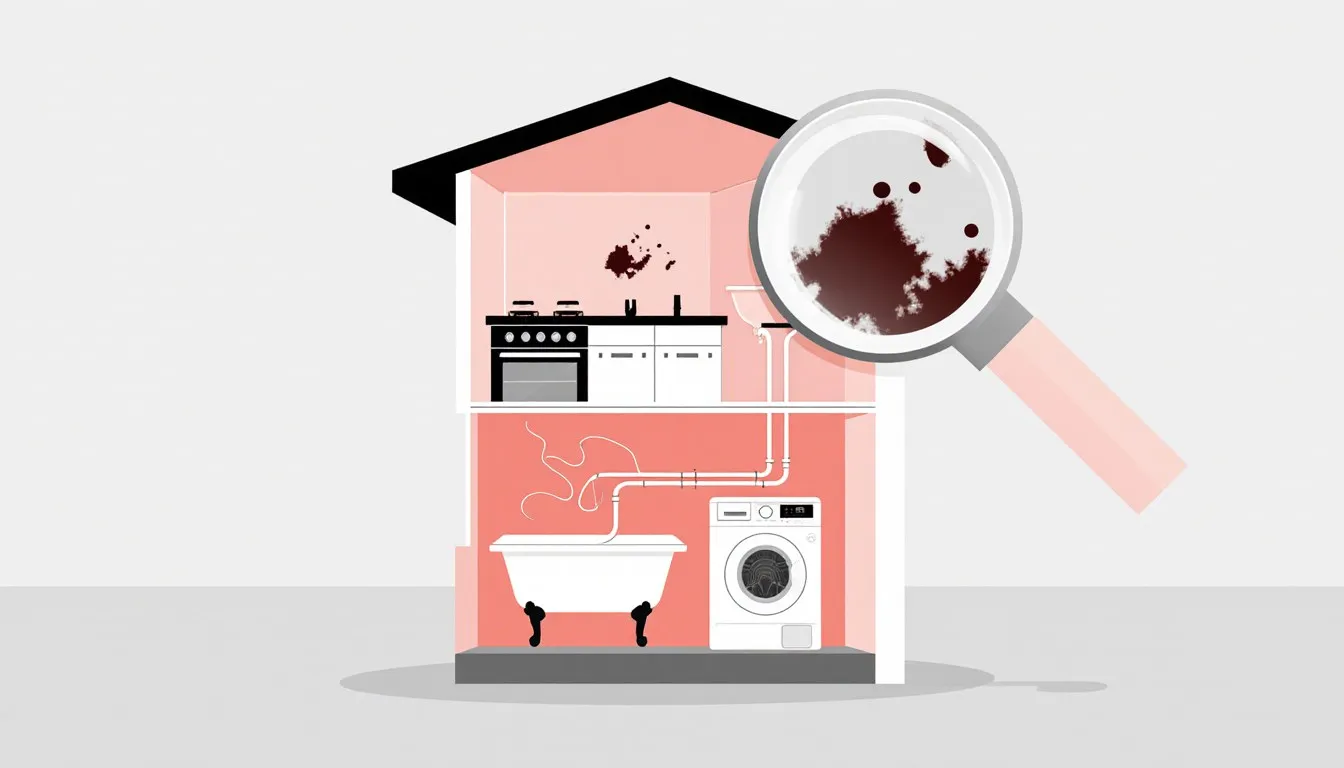
A house that smells bad has a source, and the source is almost always somewhere you can put your hand on in under half an hour. Damp towel behind a door, standing water in a drain trap that dried out, something organic under the fridge, a filter that should have been swapped two seasons ago. Spraying the room does nothing to any of that. So before you buy a single product, walk the house with your nose and find the thing, then pick the cheapest fix that addresses it. Below is the walk itself, room by room, plus the handful of habits that keep the smell from coming back and the three smells that mean you stop and pick up the phone.
Why does a house start smelling bad in the first place?
Something in the house is wet, rotting, or off-gassing, and whatever it is has been quietly putting molecules into the air the whole time you have been wondering about it. Check wet first. Open the cabinet under the kitchen sink, put your hand flat on the cabinet floor in the back corner where the trap goes through, and feel whether the particleboard is cool and slightly soft instead of dry. That is thirty seconds and it settles more arguments than anything else in this article. If it comes up dry, you move along to the other two, organic matter and chemical residue, and each of those hides in its own short list of spots. Sorting a smell into one of the three turns “the house smells” into three or four doors to open.
Moisture is the biggest of the three by a wide margin. Water sitting where air does not move grows mildew and mold, and both of those give off the flat, earthy, basement-in-August smell most people call musty. It does not take a flood. A bathmat that never fully dries, a crawlspace with a torn vapor barrier, a window that sweats every January and drips onto the sill, a washing machine gasket with an inch of gray sludge folded into it. Damp plus dark plus still air is the whole recipe.
Organic matter is the second: food, grease, pet accidents, and, occasionally, an animal that got in and did not get out. This category is the most obviously unpleasant and usually the easiest to locate, because the smell gets stronger the closer you get. A dead mouse in a wall cavity is the exception and the reason people lose whole weekends.
Chemical residue is the third and the sneakiest, because it does not smell like decay at all. New carpet and new foam furniture off-gas for weeks. Old cigarette smoke soaks into drywall, paint, ceiling texture, and the inside of ductwork, then keeps releasing on humid days for years. Mothballs are their own particular misery: the stuff sublimates straight from solid to vapor, which is exactly why the smell gets into everything it was stored near.
There is a fourth category worth naming separately because it behaves differently. Sewer gas comes up through plumbing when a drain trap loses its water seal, and it does not come from anything you can clean. That one gets its own treatment further down.
The reason this matters before you touch a bottle of anything: the fix is different for each category. Moisture needs drying and airflow. Organic matter needs removal. Chemical residue needs time, ventilation, and sometimes sealing paint. A single all-purpose cleaner does not address any of them properly, and a scented spray addresses none of them at all.
How do you actually find where a bad smell is coming from?
You walk the house cold, with your nose, before you buy anything. Cold means the house has been closed up for a few hours, ideally overnight, because a ventilated house hides its own smell. Open the front door after being outside for ten minutes and the first breath tells you more than an hour of hunting later in the day, once your nose has given up and adapted.
Work room by room, and in each room work low and high. Odors from decay and damp tend to pool low. Smoke residue and cooking grease live high, on the ceiling and the tops of door frames. Get down and sniff along the baseboard, then stand and sniff near the light fixture. If one is clearly worse than the other, you have learned something about what you are chasing.
The kitchen
Start at the sink. Run the disposal with cold water for ten seconds and smell what comes up. Then look under the sink with a flashlight, actually look, not glance: a slow supply line drip soaks the cabinet floor and the particleboard holds it like a sponge. Feel the back corner with your hand. If the wood is soft or dark, you have found damp, and cleaning the cabinet does nothing until the drip is fixed.
Pull the fridge out. This is the single highest-yield move in the kitchen and most people have never done it. Under and behind a refrigerator you find the drip pan, spilled liquid that ran under the toe kick years ago, and, in a shocking number of houses, an old potato. While the fridge is out, vacuum the condenser coils. That is unrelated to smell but you are already there.
Then check the obvious in the order people skip them: the trash can itself, not the bag, because liquid gets under the liner and stays; the dishwasher filter, which unscrews from the floor of the tub on most modern machines and traps a truly memorable amount of food; the microwave, top surface included; and the toe-kick gap under the cabinets, which is where a dropped piece of chicken goes to live out its days.
Bathrooms
Bathrooms are moisture by default, so you are looking for where the moisture stays. Check the base of the toilet where it meets the floor. If the flooring is discolored, soft, or the toilet rocks at all when you push it side to side, the wax ring may be failing and letting water and gas out at the floor line. Check the caulk line at the tub, the underside of the bathmat, and the inside of the shower curtain liner along the bottom hem.
Run the exhaust fan and hold a square of toilet paper against the grille. If it does not stick, the fan is either not moving air or not vented anywhere useful, and a bathroom without working ventilation will smell musty no matter how often you clean it. Some older fans vent into the attic, which just relocates the problem.
Check the sink overflow hole, the little slot near the rim. It grows a biofilm that smells and nobody ever cleans it.
Laundry, basement, and crawlspace
Open the washing machine door and pull back the rubber gasket on a front loader. Front loaders that live behind a closed door will grow mildew in that fold, reliably, and it will scent every load you wash. Check the floor drain if there is one, and check the drain hose connection.
In a basement, put your nose to the corners and to anything cardboard sitting on the concrete floor. Cardboard on concrete wicks moisture and turns musty fast, and a stack of old boxes is very often the whole answer. Look at the foundation walls for a chalky white powder or a darker band low on the wall, both signs that water has been moving through.
Everywhere else
Closets, especially ones sharing an exterior wall. Behind and under upholstered furniture. Inside the HVAC return grille, where a filter that has gone gray and furry will scent the entire house on every cycle. Under area rugs, particularly if you have pets, because carpet pad absorbs and holds what the surface fibers let through.
If the smell is strongest in one room and gets weaker as you leave it, you are close. If it is even everywhere, suspect the HVAC system moving it around, or something in a return duct, or a whole-house humidity problem. Take notes as you go, one line per room, because by the fourth room your nose is lying to you and you will not remember whether the guest closet was worse than the hall.
What are the most common sources of bad smells in a house?
Most complaints land in a handful of buckets. Here is the short field guide, enough to recognize what you have and know what direction to go.
- Musty and earthy: mildew, mold, or damp materials, and the most common complaint of the lot by a wide distance. It is also the most fixable, since drying the space beats treating any surface, which is the point the walkthrough on easy ways to get rid of a musty smell keeps coming back to. The tell is weather: it eases off during a dry windy week and is back the first humid morning.
- Sharp, sour, catching at the back of your throat: more often an active colony growing behind something than mildew sitting on top of it. Scope is what changes with that distinction, and the rundown on getting rid of mold smell is where the line between the two gets drawn.
- Sweet, rotting, worst in the afternoon: an animal died in a wall, a floor cavity, or a duct. The guide to getting rid of dead rodent smell walks the search, and the useful tell while you are still narrowing it down is heat. The smell tracks the warmest hours and the warmest wall, which tells you which side of the room to open.
- Stale, tarry, stronger on humid days: tobacco residue soaked into paint, drywall, ceiling texture, and the inside of ducts. Airing the house out does almost nothing here; cleaning and sealing does, and the piece on getting rid of tobacco smell puts those steps in order. Confirm it in ten seconds by wiping a white cloth along the top edge of a door frame and looking at the cloth.
- Chemical, plasticky, brand new: off-gassing from carpet, pad, or foam furniture, on a clock of days to a few weeks. There is nothing here to fix, only to hurry, and hurrying it is what the notes on getting rid of new carpet smell are for.
- Pungent, medicinal, unmistakable: mothballs, whose vapor works its way into fabric, wood, and everything stored in the same closet. Getting rid of mothball smell from your covers comes down to coaxing that vapor back out of the fibers, so judge your progress by how a single item smells after a day in moving air, not by how the closet smells.
- Acrid, scorched, sticking to every surface: burnt food, or an appliance that cooked something inside itself. The steps for getting rid of a burnt smell handle the first one. For the second, the tell is timing: if the smell shows up every time that machine runs, the machine is the source and you have stopped dealing with an odor problem.
- Rotten egg or sewage: a drain trap that has gone dry, or a plumbing vent that is blocked. Do not start experimenting with this one. Read the safety section below first.
Two of these categories fool people constantly. Mildew and mold get used interchangeably, but a black line in tub grout and a soft dark patch spreading behind a baseboard are not the same problem at the same scale. And “the whole house smells” is very often the HVAC system faithfully distributing one localized problem into every room, which is why people replace carpet that was never the issue.
What actually removes household odors instead of just masking them?
Removal happens in a cost order, and the free stuff works better than people expect. The whole ladder runs from nothing to about $300 at the bottom rung, and most houses never get past the second one. Run it from the top, and only move down when the rung above has genuinely failed.
Rung one: air and dry, which costs nothing
Open windows on opposite sides of the house and get a cross-draft going. Run the bathroom and kitchen exhaust fans while you do it, because they pull air out and give the incoming air somewhere to go. Twenty minutes of real airflow moves more odor out of a house than any product on any shelf, and it costs you exactly nothing but a temperature swing.
Then dry whatever is wet. Box fan pointed at the damp cabinet floor, closet doors propped open, mat hung over the tub rail instead of lying on the tile. Most musty smells are a drying problem wearing a cleaning problem’s clothes.
Rung two: absorbers, $1 to $20
Baking soda runs about a dollar a box and is the reliable workhorse for enclosed spaces: an open box in the fridge, a generous layer sprinkled onto carpet and left several hours before vacuuming, a cupful set in a closed cabinet overnight. It has real limits. It works in a small still volume, not an open room, and it needs contact time. Sprinkling it and vacuuming five minutes later accomplishes nothing.
Activated charcoal is the better choice for a space you cannot ventilate, a closet, a basement corner, a car, a cabinet under a sink. Figure $10 to $20 for a couple of pounds, roughly ten times the price of baking soda, and in exchange it works on a wider range of odor compounds. Buy the loose granules or the fabric bags sold for the purpose; aquarium carbon works too and is often cheaper by weight. It saturates eventually and stops working, which is the part nobody mentions.
Coffee grounds and a bowl of vinegar both have their believers, and people have sworn by the pair of them in kitchens for generations. Vinegar in an open bowl does modestly well in a closed room. Coffee grounds mostly add coffee smell on top of the smell you have, which brings us to a problem discussed below.
Rung three: wipe the surfaces the smell lives on, under $10
A diluted white vinegar solution, roughly one part vinegar to one part warm water, cuts through the film that holds odor on hard surfaces: the inside of the fridge, cabinet interiors, tile, sealed countertops, the plastic of a trash can. It smells sharp while you work and that smell is gone in under an hour. For general grime, plain dish soap and hot water does as well, and on greasy kitchen surfaces it does better. A gallon of white vinegar is around $4 and the soap is already under your sink, so this entire rung costs less than a sandwich.
Two rules on vinegar. Keep it off natural stone, marble, travertine, and unsealed grout, because acid etches them permanently. And never mix it, or any other cleaner, with chlorine bleach. Bleach plus acid releases chlorine gas, and bleach plus ammonia releases chloramine vapors. Both send people to emergency rooms every year from ordinary bathroom cleaning. One product at a time, rinse in between, and read the label, because on cleaning chemicals and pesticides alike the label is the law.
For drains, pour a kettle of hot water down, then follow with a half cup of baking soda and a cup of vinegar if you like the fizz, then flush again with hot water after a few minutes. What actually does the work is the hot water and the mechanical scrub, so on a kitchen sink go after the visible gunk on the disposal splash guard with a brush. That rubber flap holds more rot than the disposal does, and lifting it up to look is the step everyone skips.
Rung four: machines and hard measures, $100 to $300
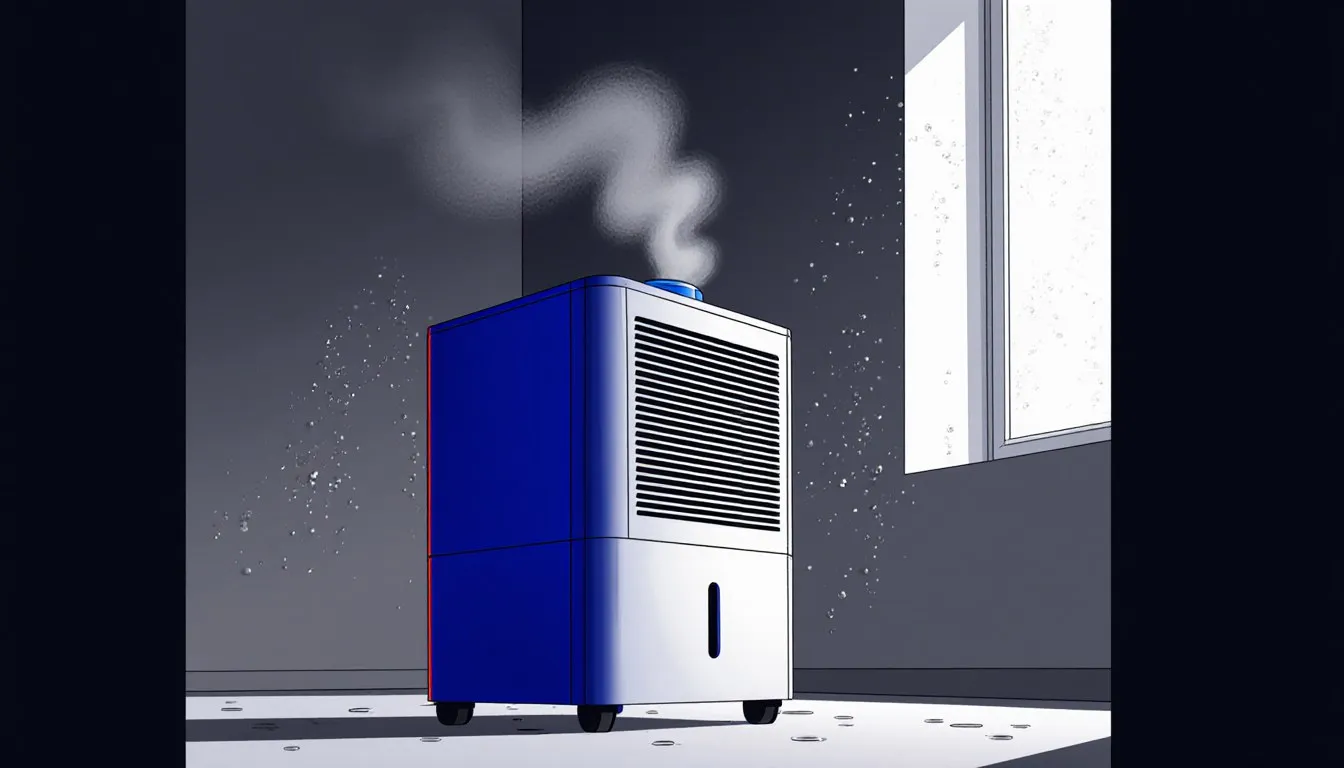
A dehumidifier sized for a basement or crawlspace runs $150 to $300, and in a chronically damp one it often ends a musty smell permanently, which makes it the best money on this list. Aim for indoor humidity somewhere in the range of 30 to 50 percent; above about 60 percent you are running a mold farm. A hygrometer costs $10 to $15 and tells you exactly where you stand, so buy one before you buy anything larger.
A HEPA air purifier with a carbon stage, $100 to $250 for a room-sized unit, helps with airborne particles and some odor, in that one room, while it runs. It is not a cure for a source you have not found.
Ozone generators are the one to be careful about. They are sold hard for odor removal, and ozone does react with odor compounds, but ozone at concentrations high enough to do that is a respiratory irritant, and the EPA has been plain that it is not safe to run one in occupied space. People, pets, and plants out of the house, and a long airing afterward, if you use one at all. On a smell you have already located, a fan and a garbage bag will usually finish the job without any of that.
Do air fresheners and odor sprays get rid of smells or just hide them?
They mask. A plug-in, an aerosol, a scented candle, or a reed diffuser adds a smell to the air; none of them removes the one you have. Adding a smell is the entire job the product was designed for, and it helps to say that plainly before you spend money expecting more.
The trouble is what masking does to your ability to diagnose. Smells stack. Cinnamon apple over damp carpet gives you a room that smells like damp carpet and cinnamon apple at the same time, which most people find worse than the damp carpet by itself, and it is the mixture that visitors comment on. Worse, it dulls the one instrument you have. Once the hallway smells like linen breeze, you cannot follow your nose to the source anymore, and finding the source is the whole job.
There is a category worth separating out. Some products marketed as odor eliminators use cyclodextrins, ring-shaped molecules that trap odor compounds rather than covering them, and the fabric sprays in that class do genuinely reduce smell on upholstery and curtains. They still do not fix a wet subfloor. Nothing you spray does.
A spray is a fair stopgap in exactly two situations. You have found and fixed the source, and you want the room pleasant while the last of it clears. Or people are arriving in twenty minutes and you will deal with it properly on Saturday. Both are honest. What is not honest is the plug-in that has been in the hall outlet for eight months because the smell keeps coming back. Eight months is long enough for a slow drip to soften a cabinet floor and start something growing under it, and every one of those months the plug-in bought was a month the leak kept running.
If you want the house to smell good rather than merely neutral, do it after the source is gone and do it with something with a short half-life. Simmer a pot of water with citrus peel and a cinnamon stick, or crack the windows on a good day. The smell of clean air is mostly the absence of everything else.
Which bad smells mean you shouldn’t just be freshening the air?
Three smells change the job from a weekend project to a phone call. None of these needs drama, they just need the right response the first time.
Gas
Natural gas has no smell of its own. Utilities add mercaptan, which is why a gas leak smells like rotten eggs or sulfur. If you smell that, do not hunt for the source. Do not flip a light switch, unplug anything, or use your phone inside the house, because a spark is a spark. Get everyone out, leave the door open behind you, and from outside and away from the building call the gas utility’s emergency line or 911. Gas utilities generally treat a reported odor as an emergency and will send someone at any hour, and many do not bill for that visit. This is the hardest line in this article: gas is not a DIY diagnosis.
Sewage
A sewage or rotten-egg smell that is not gas is usually sewer gas coming up through plumbing, and there is one cause you can fix yourself in about ten seconds. Every drain has a P-trap, that U-shaped bend under the sink, holding a small plug of water that blocks gas from the pipe below. A fixture nobody uses, a guest bathroom, a basement floor drain, a laundry sink, eventually evaporates its trap dry and the seal is gone. Run water down every drain in the house for thirty seconds, including the floor drains and the tub you never use. Then wait a day. If the smell clears, that was it, and running those drains monthly keeps it away. For a floor drain that keeps drying, a few ounces of mineral oil on top of the water slows evaporation considerably.
If the smell persists after every trap in the house is wet, stop guessing. What is left is a failed toilet wax ring, a cracked or disconnected drain line inside a wall or under the slab, or a blocked plumbing vent stack on the roof. Those need a plumber, and sewer gas contains methane and hydrogen sulfide, so an ongoing sewage smell inside a house is not something to live with while you think about it.
Strong musty smell in one spot
A general musty house is a drying problem. A strong musty smell concentrated in one location, especially with staining, a soft or spongy spot, bubbling paint, or buckled flooring, means water is getting somewhere and something is growing there. Surface mildew on tile grout or a windowsill is yours to clean. Growth spreading behind drywall, under flooring, or inside a wall cavity is a different scope, and the honest advice is that any area much bigger than a few square feet, or any growth you cannot see the edges of, is assessment territory rather than a bucket-and-sponge job. Cutting into a wall to look means you now have exposed spores and a hole. Get eyes on it from someone who does remediation for a living, and get the water source fixed either way, because remediation without fixing the leak is just an expensive delay.
One more, and it belongs here even though it is not a smell you go looking for. If your house was built before 1980 and you are considering scraping, sanding, or cutting into old flooring, popcorn ceilings, pipe wrap, or duct insulation to chase an odor, stop. Those materials can contain asbestos or lead paint, and disturbing them is how it gets into the air. Testing is inexpensive relative to the alternative, and it is the answer here.
A burning or hot-electrical smell
Worth naming because people wait on it. A sharp burning-plastic or fishy smell near an outlet, a switch, or the service panel can mean overheating wiring or a failing breaker. Shut off the circuit at the panel if you can do so safely, and call a licensed electrician. Inside the panel cover is not a place to go looking, no matter how good your flashlight is.
How do you keep bad smells from coming back?
Prevention is mostly about moving air and not letting water sit. Four habits handle nearly all of it.
Run the fans and mean it. The bathroom fan goes on before the shower and stays on for fifteen to twenty minutes after, which is the part people cut short. The range hood goes on for anything with grease or a long simmer, and it needs to be a hood that vents outside, not a recirculating one that pushes the same air back at you through a charcoal pad. Wash or replace those pads and the metal grease filters on a schedule; a saturated grease filter is a smell source in its own right.
Change the HVAC filter. Every one to three months depending on the filter, whether you have pets, and how much dust the house makes. A gray, matted filter both smells and starves the system of airflow, and the whole house breathes through it. Write the date on the cardboard edge in marker when you install it, because you will not remember otherwise. While you are in there, look at the return grille itself, which collects a felt of dust that everyone ignores.
Keep the wet things drying. Towels hung spread out rather than folded on a hook. Wet laundry out of the washer the same day, and the door of a front loader left ajar between loads so the gasket dries. Dish sponges wrung out and standing up. Pet bedding washed monthly. A boot tray by the door instead of wet shoes on carpet.
Run the routine on the things with drains. Hot water down every drain in the house monthly, the guest bath included. Disposal splash guard scrubbed. Trash can washed out, not just relined, whenever something leaks in it. Fridge drip pan checked twice a year, which requires pulling the fridge out and is exactly as fun as it sounds.
For a room that is damp no matter what you do, a basement, a crawlspace, a bathroom with no window, a dehumidifier running to hold humidity in the 30 to 50 percent range fixes the underlying condition rather than the symptom. Empty the bucket or run the hose to a drain so you are not maintaining a small indoor pond, and clean the coils and reservoir once a season, because a dirty dehumidifier will start producing the smell it was bought to prevent.
Twice a year, do the cold walk again on purpose. Come back from a weekend away and take the first breath inside seriously instead of unloading the car. That first honest breath, before your nose adapts, is the best diagnostic tool in the house, and it is free every single time you use it.
In This Guide
- Easy to do solutions to get rid of musty
- How to get rid of dead rodent smell 5
- How to get rid of mold smell
- How to get rid of mothball smell from your
- How to get rid of new carpet smell
- How to get rid of tobacco smell
- Mildew smell removal
- Musty odor
- Smart and effective steps to get rid of burnt
- Use any of these 8 ways to remove awful
Ray Mercer
Staff Writer
Ray Mercer has spent thirty years keeping old houses running and has fixed most things twice, the second time correctly. He believes the majority of household problems fall to patience, a clean work area, and a twelve dollar part, and he will tell you plainly which jobs are not yours to do.