The Load, Start to Finish: Ray’s Working Laundry Routine
How to do laundry properly, walked step by step: sorting, water temperature, detergent dosing, cycles, and drying, from hamper to closet without the guesswork.
Nine times out of ten, a laundry complaint traces back to three decisions: how the load got sorted, what temperature the water was, and how much detergent went into the drum. Fix those three and the graying, the pilling, the towels that smell fine dry and sour damp, and the shirt that came out two sizes smaller mostly stop happening. Below is the whole load in the order I actually run it, hamper to closet, with the one or two decisions in each step that matter and honest notes on the steps that do not.
I have been doing my own laundry for thirty years and ruining a garment about once every three of them, which is roughly the rate you should expect if you are washing anything interesting. The routine here is not fussy. Most of it is habit, and habit is cheap.
What actually separates a load done right from one done wrong?
A load goes wrong for one of four reasons: the wrong things were washed together, the water was too hot for the fiber, the drum was packed too full to move, or the dryer finished a job the wash had already started. Detergent brand is somewhere down around item nine, well behind all of those, and switching brands to solve a problem caused by an overstuffed drum is a very popular way to spend money without changing anything.
Think of the machine as a mechanical process, because it is one. Water carries surfactant to the fiber, mechanical action lifts the soil off, water carries it away, and the spin gets most of that water back out. Every one of those steps needs room. A drum crammed to the gasket cannot tumble, and clothes that cannot tumble cannot get clean no matter what you pour in.
Here is the sequence the rest of this article follows, because it is the sequence the load itself follows:
- Sort by color, weight, and how dirty things are.
- Read the care label on anything new or expensive.
- Pretreat stains before they see any heat.
- Pick a water temperature.
- Measure detergent instead of pouring it.
- Match the cycle and spin speed to what is in the drum.
- Dry deliberately, not by default.
- Leave the machine in a condition that does not breed mildew.
Run that in order and you have a proper laundry routine. Skip around and you get the pile of disconnected tips most people are working from.
How should you actually sort a load?
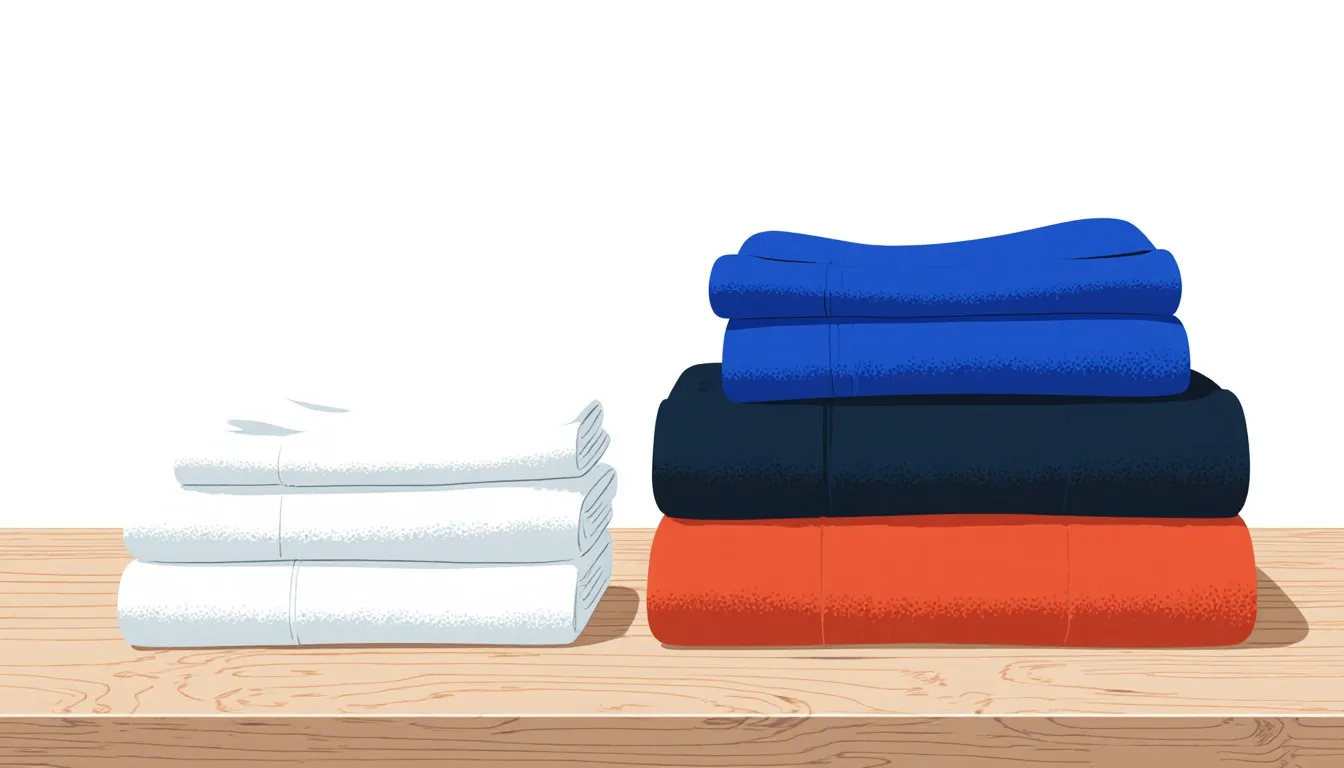
Sort on three axes, not one: color, fabric weight, and soil level. Darks with darks and lights with lights is the sort everyone knows, and it is the least important of the three once clothes are past their first few washes.
Color first, since it is the one that causes the visible disasters. Keep true reds and anything brand new away from your whites, and keep whites away from anything that has ever crocked dye onto your hands. In between sit the mid-tones, the grays, olives, faded navies, and washed-out blacks, which get along fine in one load.
Weight matters more than most people expect. Towels and jeans in with T-shirts and blouses is a bad trade for the lighter items: heavy wet cotton beats on thin knits for the whole cycle, and it is where a lot of pilling and stretched collars come from. Towels also shed lint that a fleece or a dark cotton shirt will wear home. Run towels and denim as their own load and both halves of your wardrobe last longer.
Soil level is the third axis. Yard clothes, gym gear that has been sitting damp, kitchen rags, anything with actual dirt or grease in it, none of those belong with lightly worn office clothes. Wash a genuinely filthy item with clean ones and the soil redistributes; that is the mechanism behind a load that comes out uniformly dingy with nothing specifically wrong on any one garment.
When you can skip the sort
Small households doing three loads a week are not going to run five sorted piles, and they do not need to. The practical minimum is two piles: whites and light colors in one, everything darker in the other, with towels pulled into their own load when there are enough of them. Add a third pile the day you buy something red.
Anything with hardware gets attention regardless of pile. Zip the zippers, because an open zipper pull is a small blade dragging across everything it touches for forty minutes. Fasten bra hooks or use a mesh bag. Empty pockets, and check them twice on kids’ jeans; a laundered crayon in a hot dryer is a genuinely miserable afternoon.
What are those symbols on the care label telling you?
The label is your instruction sheet, and four shapes carry most of the meaning. A tub of water is washing, a triangle is bleach, a square is drying, and an iron shape is ironing. A circle inside any of those points at professional cleaning. A cross through any symbol means do not do that thing, and that one is worth trusting even when the garment looks sturdy.
Detail lives inside the shapes. Dots inside the wash tub or the dryer square indicate temperature, more dots meaning more heat. A hand in the tub means hand wash only. Lines under a symbol call for a gentler cycle: one line is permanent press, two lines is delicate. Inside the drying square, a circle means tumble dry and a horizontal line means dry flat, which is the instruction sweaters give you and the one people ignore most often, right before the sweater comes out fitting a child.
The bleach triangle has three states worth knowing. Empty triangle, any bleach is allowed. Triangle with two diagonal lines inside, oxygen bleach only, no chlorine. Solid or crossed-out triangle, no bleach at all. If you get one wrong, the chlorine-on-a-no-chlorine-garment mistake is the one that shows up immediately and permanently.
Nobody memorizes all of them, and you do not have to. Check the label on anything new, anything you paid real money for, and anything structured (a suit jacket, a lined dress, a coat), then wash the rest by category. If a symbol on a tag stumps you, a full rundown of laundry symbols and what they mean is a useful thing to have bookmarked.
One piece of advice about labels that people resist: believe the fiber content line as much as the symbols. Rayon and viscose behave differently from cotton no matter what the tub says, wool shrinks from agitation and heat together rather than from either alone, and anything with elastane in it has a hard limit on how much dryer heat it will tolerate before the stretch stops coming back.
What water temperature should you actually use?
Default to cold, which in most houses means whatever the tap gives you, somewhere in the 60 to 80°F (15 to 27°C) range. Use warm, roughly 90 to 110°F (32 to 43°C), for genuinely dirty everyday loads, and save hot, 130°F (54°C) and up, for sheets, towels, underwear, and grease. Cold water washing has gotten dramatically better because detergents were reformulated for it: the enzymes and surfactants in a modern cold-water formulation are designed to work at tap-cold temperatures where older powders essentially needed heat to dissolve and function.
Cold is also where the money is. Heating the water is the large majority of the energy a washing machine uses; the motor turning the drum is a rounding error next to the water heater. Washing cold is the single change that most reduces what a load costs to run.
What cold gives you besides cost: less fading, less shrinkage, less dye bleeding, less setting of protein stains like blood and egg, which heat cooks into the fiber. What cold costs you: less effectiveness on body oils and greasy soils, which genuinely respond to warmth, and less sanitizing power.
Warm, that 90 to 110°F (32 to 43°C) band, is the middle ground for work clothes, kids’ clothes, and anything that has been worn hard. It lifts body oil better than cold and stays under the temperature where cotton starts giving up size, so you get most of hot water’s cleaning without the fading. One thing worth knowing about your own machine: if the water heater is set at the common 120°F (49°C), a warm fill mixes down to somewhere near 100°F (38°C) by the time it reaches the drum, which is why warm on a basic machine can behave a lot like cool.
Hot earns its place in a few specific cases, and hot here means 130°F (54°C) and up. Bed linens, towels, and underwear benefit from hot water for hygiene reasons, and hot water is what actually moves cooking grease and heavy body oil out of fabric. True sanitizing is usually pegged higher, around 140°F (60°C) held for a good stretch of the cycle, which a water heater set at 120°F (49°C) cannot deliver on its own; that is the job an onboard heater and a sanitize cycle are doing. If someone in the house has been sick, or you are washing something a pet made a mess of, hot plus a long cycle is the right call on anything that can take it. The catch with hot is that it is also the fastest route to shrinking cotton, setting stains you have not treated, and fading colors, so it belongs on whites, on durable cottons, and on nothing you are precious about.
A note about how the machine handles this: on many machines “cold” means whatever comes out of the cold tap, which in an unheated basement in February can be near freezing and below the point where detergent works well. Some machines temper cold fills with a little hot water for exactly this reason. If your winter loads come out worse than your summer loads, that temperature drop is the usual explanation, and choosing warm through the cold months fixes it.
How much detergent does a load really need?
Less than you are using. Overdosing detergent is the most common laundry mistake there is, and it is the direct cause of stiff towels, dingy darks, a musty smell in clean clothes, and residue buildup inside the machine.
The mechanism is simple. Detergent that has nothing left to grab onto does not vanish at the drain; some of it stays in the fabric. That residue attracts and holds soil, it stiffens fibers, and in the machine it forms a film in the drum, the hoses, and the gasket where mildew is happy to live. Past the point where the surfactant has soil left to grab, the surplus stays where it is, and every load after that one starts on top of what the last one left behind.
Some working rules:
- Use the fill line on the cap, not the whole cap. Those caps are designed generously, and the actual dose line is often a third of the way up.
- Dose for the load you have, not the load the bottle imagines. A normal, lightly soiled load needs less than the labeled amount for a large heavily soiled one.
- If you have soft water, cut the dose further. Soft water needs meaningfully less detergent, and people who move from hard water to soft usually keep overdosing for years without connecting it to their laundry going flat.
- High-efficiency machines need HE detergent, full stop. HE machines use much less water, and a conventional high-sudsing detergent in one produces foam the machine cannot rinse away.
- Pods take away the dosing decision, which is their real advantage, but they also mean a small load gets a full dose. For half loads, liquid you can measure is the better tool.
The test for whether you have been overdosing: run a load of towels with no detergent at all. If you get suds, you have residue built up in the fabric, and a few no-detergent cycles will strip it out. Those suds are months of surplus dose coming back out of the cloth.
The soap-versus-detergent distinction is worth knowing if you have hard water, since true soap reacts with the minerals in hard water and leaves a curd on fabric where a synthetic detergent does not, and the differences between soap vs detergent go deeper than the packaging suggests. And if you would rather step off the commercial-detergent shelf entirely, there are a number of alternatives to laundry detergent people run permanently with reasonable results, with the same dosing discipline applying to all of them.
Which wash cycle and spin speed fit the load?
Match the cycle to the sturdiest thing in the drum that you care about, and the spin speed to how much stress the fabric can take. Cycles are two variables wearing different names: how vigorously the machine agitates, and how fast it spins at the end.
- Normal or cottons: high agitation, high spin. Right for towels, sheets, jeans, work clothes, and anything sturdy.
- Permanent press or casual: moderate agitation, lower spin, sometimes a cool-down rinse. Right for everyday shirts, blends, and anything you would rather not iron.
- Delicate or gentle: low agitation, low spin. Right for knits, lingerie, loose weaves, and anything with lace or embellishment.
- Heavy duty: longer wash time with high agitation, for genuinely dirty work clothes.
- Bulky or bedding: designed to keep large items moving instead of balling up.
Spin speed is the variable people ignore, and it does real work. A fast spin pulls more water out, which means shorter dryer time and lower energy use, and it does that by pressing fabric hard against the drum wall under substantial force. That is what puts the deep creases in a dress shirt, and it is hard on elastic, on loose knits, and on anything with structure. Drop the spin for delicates and you will trade a few extra minutes of drying for a garment that keeps its shape.
Front-loaders and top-loaders get their mechanical action differently, which changes what you should expect. A front-loader tumbles clothes and drops them through the water, which is gentler on fabric and uses far less water. A traditional top-loader with a center agitator pushes clothes past a moving post, which is more aggressive; it is faster and it is harder on knits. Top-loaders without an agitator, the impeller kind, sit somewhere between. None of these is wrong, but if you moved from an old top-loader to a front-loader and your clothes suddenly seem less clean, the answer is usually that you are still overfilling it. If you are shopping rather than adapting, the specifics that separate one machine from another are covered in a rundown of the best front load washer.
Load size is the setting nobody adjusts and everybody should. A properly loaded drum is roughly three-quarters full with clothes loose enough that you can fit your hand down the side. If you have to push the door shut, take something out. Underloading wastes water; overloading wastes the entire cycle.
How do you handle a stain before it goes in the machine?
Treat the stain for what it is made of, and treat it before it ever meets heat. Timing beats product choice by a wide margin here, and no amount of expensive spray recovers a stain that has already been through a hot dryer.
The categories that matter:
- Protein stains (blood, egg, dairy, sweat): cold water only. Heat cooks protein into the fiber permanently. Rinse cold from the back of the fabric, then treat with an enzyme detergent.
- Oil and grease (cooking oil, salad dressing, makeup, motor oil): these need surfactant and warmth. Work a little liquid detergent directly into the spot, let it sit, then wash in the warmest water the fabric allows.
- Tannin stains (coffee, tea, wine, fruit juice): flush with cool water fast, and keep bar soap off them, since soap has a reputation for setting tannin stains.
- Dye stains (grass, ink, some fruit): these need a solvent or an oxygen-based product, and they are the hardest of the four. Grass in particular responds to alcohol before it responds to detergent.
The universal technique matters as much as the product. Blot, never rub, because rubbing drives the stain deeper into the weave and breaks fiber surfaces so they hold color. Work from the outside of the stain inward so you do not spread the ring. Flush from the back of the fabric so the stain exits the way it came in rather than being pushed all the way through.
Then the one rule that saves the most garments: after washing, check the stain before the item goes in the dryer. If it is still there, wash it again. A dryer cycle is a heat-set, and the stain you could have removed with a second wash becomes the stain you live with.
Two chemicals never go in the same bucket, the same sink, or the same machine: chlorine bleach and ammonia. Mixing them produces chloramine gas, which is a genuine hazard in a small closed laundry room, not a theoretical one. That also means no chlorine bleach mixed with any cleaner whose ingredients you have not read, since ammonia hides in plenty of household products. Bleach goes in with water and detergent, alone, and nothing else, ever. Same principle as anywhere else in the house: the label is the law.
What’s the right way to dry each load?
Dry on the lowest heat that will finish the job in reasonable time, and pull things out slightly damp rather than bone dry. Almost all dryer damage is heat damage, and almost all of it is avoidable.
What heat actually does: it degrades elastane and rubber, which is why waistbands and sock cuffs go slack and why a swimsuit dried hot a dozen times stops fitting. It melts and roughens the surface of synthetics, which is a slow route to pilling. It shrinks cotton by relaxing fibers that were stretched during manufacture, and that shrinkage happens mostly in the dryer, not in the wash. And it heat-sets wrinkles into anything left sitting in a stopped drum.
What goes where:
- Towels, sheets, and sturdy cottons: medium to high heat is fine and gets the job done.
- Everyday shirts and blends: medium or permanent press, and hang them the moment the drum stops.
- Anything with elastane, activewear, bras, swimwear: low heat or air, or hang them. This is the category where dryer heat costs you the most money over time.
- Sweaters and knits: dry flat on a towel, reshaped by hand. Hanging a wet sweater stretches it out under its own weight.
- Anything you have already had shrink on you: air dry, and stop guessing.
Line drying is free, gentle, and adds a bit of UV brightening on whites, and its two costs are time and stiffness. Line-dried cotton gets crisp because there is no tumbling to soften the fibers; ten minutes in the dryer on low afterward fixes that entirely. Indoors, a drying rack works, though it puts a real amount of moisture into the air. If you dry indoors through the winter and your windows sweat, those two things are related.
Clean the lint filter every single load. This one is not about laundry quality. A clogged filter makes the dryer run hot and long, and lint plus heat is how dryer fires start. While you are at it, get a look at the vent duct behind the machine once a year and pull the buildup out. It is a twenty-minute job that removes a real fire risk from your house.
Bulky items follow different rules. A duvet, a comforter, or a heavy quilt needs enough room to tumble freely, and a home machine that is stuffed with one will simply spin a wet ball for an hour and produce a mildew problem inside the batting a few days later. If yours will not move loosely in the drum, take it to a laundromat’s large-capacity machine and dry it thoroughly with a couple of clean dry towels or dryer balls tossed in to break up the fill. The specifics of how to wash a duvet at home know the details worth reading before you try it in a standard washer.
How do you keep new colors from bleeding into the rest of the load?
Test it before it meets your other clothes. Dampen a white cloth, press it firmly against an inside seam of the new garment, and look at the cloth: any color transfer at all means that item washes alone the first few times. That is the colorfastness test, it takes thirty seconds, and it has saved more white shirts than any color-catcher sheet ever will.
New reds, deep indigos, and cheap black cotton are the usual suspects. Denim in particular carries loose surface dye for several washes, and raw or unwashed denim carries it for many more. Bright synthetics tend to be more stable than natural fibers because the dye is bonded differently, but “tend to be” is not a guarantee worth risking a load on.
When you do wash something questionable: cold water, alone or with items you would not mourn, and out of the machine promptly. Sitting wet in the drum with other clothes is when transfer really happens. Color-catcher sheets do work and are worth keeping in the cabinet for the load you forgot to test, though what they pick up is dye already loose in the water.
The full first-wash routine for anything new is worth reading before you buy the next armful of colors; how to wash your new colored clothes covers the sequence in detail. The short version for right now: test first, wash alone, unload fast.
What keeps the washing machine itself from getting grim?
Two problems account for nearly all of it: mildew in the door gasket and detergent buildup in the drum and dispenser. Both come from the same root cause, which is a warm damp machine kept shut with residue inside it.
The gasket is a front-loader’s weak spot. That rubber boot has folds that hold water after every cycle, and if the door is closed the water never leaves. Peel the fold back with your fingers, wipe it dry with a rag after the last load of the day, and check for the black speckling that means mildew has taken hold. Catch it early and a rag with warm soapy water handles it. Let it go for a year and it seeps into the rubber, and at that point the smell comes back no matter how hard you scrub.
Leave the door open between loads. That single habit prevents most gasket problems, and it costs nothing. If you have small children or a dog, prop it a few inches rather than swinging it wide.
Buildup gets handled with a monthly cleaning cycle. Many machines have a tub-clean setting; if yours does not, run the hottest, longest cycle empty. Pull the detergent dispenser drawer out (most of them lift out with a catch inside) and wash it in the sink, since that drawer collects a slime of old softener and detergent that people never look at. Wipe under the lid rim on a top-loader. And check the drain pump filter on a front-loader every few months, usually behind a small door at the bottom front, because that is where coins, hairpins, and one sock per year end up.
Fabric softener deserves a mention here since it contributes to both problems. It works by depositing a waxy coating on fibers, and that coating accumulates in the machine as well as on the clothes. It also makes towels less absorbent and reduces the wicking in athletic fabrics, which is the opposite of what those garments are for. Wool dryer balls do the softening job mechanically without leaving anything behind, and they are cheap.
One more habit worth having: move wet laundry out of the washer promptly. Clothes left in a sealed drum for a day start to smell, and that smell is bacteria that a normal cycle does not fully remove. If it happens, rewash on hot with a good detergent, and take the load out on time next round.
When does a load need more than a normal wash?
A handful of situations call for a step beyond the routine, and it is worth knowing which category you are in before you start improvising.
Whites that have gone gray or yellow are usually carrying detergent residue, hard-water minerals, or both, and chlorine poured on top of a residue problem tends to yellow the fabric further. Strip the load first, because that rung is free. Run it through a full hot cycle with no detergent at all and watch the window for suds; if you get them, run it again, and keep running it until the water stays clear. That alone brings most tired towels and undershirts a long way back. If gray survives the strip, the next rung is a long soak in the hottest water the fabric allows with a scoop of oxygen bleach, four to six hours or overnight in a tub or a bucket, then a normal wash. Hard water is the case where soaking beats washing outright, since the minerals need time in solution before they will let go of the fiber.
Brightening is separate work from cleaning, and worth not confusing with it. Optical brighteners in detergent make fabric fluoresce slightly blue under UV light so it reads whiter to the eye without removing anything, and bluing, the older version of the same trick, does it with a few drops of pigment in the rinse water. Both are cosmetics laid over a shirt that is already clean. Neither does a thing for a white that has gone gray from residue, which is why the strip comes first.
Chlorine bleach is the bottle people reach for first and should reach for last. It is hard on cotton fiber, it does most of its work in the first ten minutes, and it has no business near spandex, wool, silk, or any tag showing a crossed-out triangle. When you do use it on sturdy whites, let it dilute in the water before the clothes go in, never pour it onto dry fabric, and give it one cycle instead of a long soak, since the extra hours cost you fiber and buy you nothing. Check the age of the jug while you are down there; household bleach loses strength sitting on a warm shelf, and one that has been open a year is working at a good deal less than full power.
For colors and for anything you are unsure about, oxygen bleach is the right rung: it works slowly, it tolerates an overnight soak, and it will not eat the cloth if you forget about it. A wet white sheet on a line in full sun does a version of the same job for nothing, which is worth trying before you buy anything at all. And when a splash of chlorine lands where you did not want it, be clear about what happened, because the dye is gone from that spot and there is nothing left in the fiber to lift out. Your choices are a fabric marker or dye pen on a small mark, overdyeing the whole garment something darker, or promoting the shirt to yard duty. No product pours the color back in.
Starch and pressing sit at the other end of the room. Starch is what gives a dress shirt that crisp hand, and the cheap version is a three dollar aerosol can from the grocery store, misted lightly on a damp shirt and pressed dry, panel by panel. Heavier body, the kind that makes a pair of jeans hold their own shape, comes from soaking the garment in liquid starch and hanging it damp rather than spraying it. The one discipline starch asks for is washing it out on a regular schedule instead of layering coat on coat, since starch in the weave holds soil and has a long-standing reputation for feeding silverfish in a closet over a summer. Set the iron to what the fiber asks for rather than what finishes fastest: cotton and linen take real heat, blends want medium, and anything with much synthetic in it will glaze under a hot soleplate, a shine that does not come back out. For structured or delicate pieces, a lined jacket or an academic gown, a steamer is the lower-risk tool because nothing but vapor touches the cloth. Run distilled water through it if your water is hard, or descale it on the schedule in the manual, or it will eventually spit minerals down the front of whatever you are steaming.
Smells are their own category, because a smell that survives a wash has bonded into the fiber instead of sitting on the surface of it. Smoke is the hard case. Hang the garment outdoors for a full day before it goes anywhere near the machine, then wash warm with a cup of baking soda in alongside the usual dose, or run an hour-long presoak in an enzyme detergent. A cup of white vinegar in the rinse handles the milder versions, campfire and cooking smoke. What fails is going straight to a hot wash, which sets the residue, or covering the smell with a dryer sheet, which layers perfume over smoke and gives you something worse than either. Musty towels answer to the same reasoning: strip them first, because a normal dose of detergent cannot reach bacteria living underneath a film of old softener.
Two things in the laundry room genuinely are not DIY. If your dryer is gas and you smell gas at any point, leave the house, call the gas utility from outside, and do not touch the appliance; gas connections are a licensed trade’s work and always have been. And if a washer keeps tripping a breaker or a GFCI outlet, that is the electrical system telling you something is wrong, so stop resetting it and get an electrician or an appliance tech in. Resetting a breaker repeatedly to keep an appliance running is how a small fault becomes a large one.
What keeps it from sliding back?
None of this is difficult, and most of it costs nothing to start. The reason laundry feels like a mystery is that the feedback loop runs long. Overdose the detergent today and the bill arrives four months out as whites with a gray cast and towels that have quit absorbing, with no single load you can point to where it turned. The slowness cuts both ways, which is the useful half. Cut the dose now and the towels come back over the next dozen washes with no other effort from you.
Start with the two habits that pay back fastest. Cut your detergent dose in half for a month and see whether anything gets less clean; I have never once had someone tell me it did. And leave the washer door standing open when the last load comes out, every time, until you stop thinking about it. Six months from now you will have forgotten there was ever a smell in that machine, which is exactly the point.
In This Guide
- Alternatives to laundry detergent
- Best front load washer
- Best steam irons
- Best way to iron a graduation gown
- Bleaching clothes by hand
- Bluing agent for laundry
- He detergent brands
- How to clean a garment steamer
- How to get rid of bleach stains from clothes
- How to make liquid starch
- How to remove cigarette smell from clothes
- How to starch jeans
- How to starch your clothes
- How to wash a duvet at home know the
- How to wash polo shirts
- How to wash your new colored clothes
- Is bleaching clothes safe let s find out
- Laundry symbols and what they mean
- Little known effective natural alternatives to color safe bleach
- Optical brighteners
- Soap vs detergent
Ray Mercer
Staff Writer
Ray Mercer has spent thirty years keeping old houses running and has fixed most things twice, the second time correctly. He believes the majority of household problems fall to patience, a clean work area, and a twelve dollar part, and he will tell you plainly which jobs are not yours to do.